




In light of the rapid technological development, the contracting sector is witnessing a radical transformation that changes the rules of the game. Advanced technology plays a pivotal role in enhancing process efficiency, improving project quality, and developing work methods. However, this transformation comes with significant challenges, such as the cost of adopting new technologies, lack of competencies, and cybersecurity concerns..
Digital transformation in the contracting industry is the adoption of a wide range of modern technologies, from digital design using BIM software to the use of robots in construction work.. The goal of this transformation is to achieve increased productivity, reduce costs, improve the quality of projects, and contribute to building more sustainable cities.”
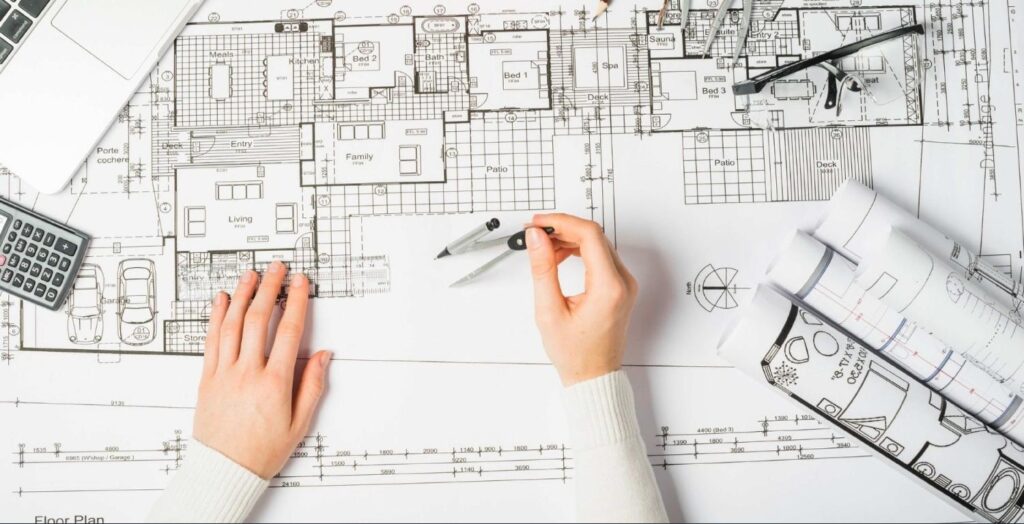
Design and engineering
Building information modeling (BIM): How technology contributed BIM Improving the accuracy of designs and reducing errors?
BIM technology (Building information modeling) It brings about a profound transformation in the ways of designing and building engineering projects. BIM provides detailed 3D models that include all aspects of the project, including architectural, mechanical and electrical elements, enabling designers and engineers to visualize the project in an integrated manner and analyze the interaction of all its components..
These models help detect errors and conflicts early during the design phase, before actual implementation begins, reducing the need for costly modifications and errors resulting from poor coordination between diverse teams..
BIM technology allows all parties involved in a project to access a unified model, which enhances communication and coordination between engineers, architects and contractors, and reduces overlaps and problems resulting from lack of information or misunderstanding..
In addition, the model can be constantly updated to reflect changes that occur during the construction phases, which maintains information accuracy, reduces discrepancy between the actual design and the original drawings, and contributes to reducing modifications and unexpected costs..
In general, BIM technology contributes to enhancing the accuracy of designs by providing advanced analysis tools and comprehensive information models, which enhances efficiency and reduces errors and problems that may affect the project quality and costs..
Virtual reality (VR) And augmented reality (AR)
Virtual reality technologies (VR) And augmented reality (AR) Powerful tools used to provide 3D visualizations of projects before they begin, which helps improve design and planning.
- • Design and planning: Virtual Reality and Augmented Reality technologies allow designs to be experienced in a virtual environment, reducing potential errors and unexpected modifications by simulating the interaction of different elements in the project..
- • Training: Virtual reality can be used to train workers to operate various equipment, machines, and processes in a safe and controlled environment, increasing training efficiency and reducing risks associated with learning new skills..
- • communication: These technologies enhance communication between different teams by providing 3D designs that can be shared and reviewed interactively, improving coordination between parties and reducing misunderstandings..

Artificial intelligence in design and contracting
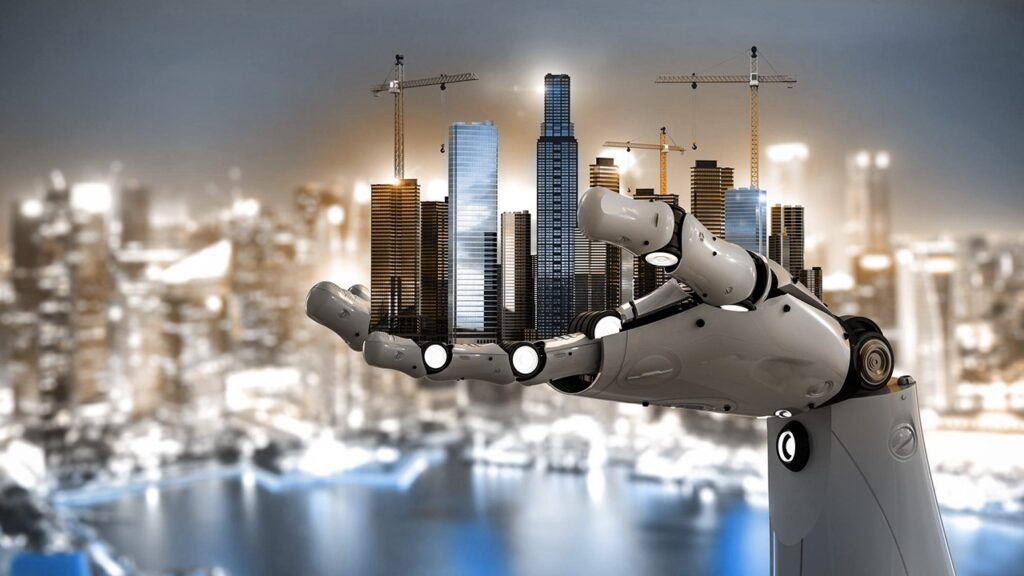
- Artificial Intelligence contributes significantly to improving the design process in the construction industry through advanced design tools that support engineers and architects in creating more effective and efficient designs.. Thanks to AI-powered software, various variables such as materials, costs and environmental requirements can be analyzed to provide optimized designs, which contributes to improving space distribution, lighting planning and increasing energy efficiency..
- In the contracting industry, artificial intelligence provides powerful tools for planning and forecasting projects. By analyzing data from previous projects, intelligent systems can provide accurate estimates of time, costs and resources required, helping to improve schedules and reduce costs.. Robots supported by artificial intelligence also contribute to speeding up the construction process, by performing specific tasks such as painting and welding, which reduces human errors and enhances safety on construction sites..
- In addition, AI enhances project and resource management by improving resource allocation and tracking work progress, which helps make data-driven decisions and improve risk management.. This contributes to accelerating the construction process and ensuring projects are delivered on time, making the construction industry more efficient and innovative.

Construction and implementation:
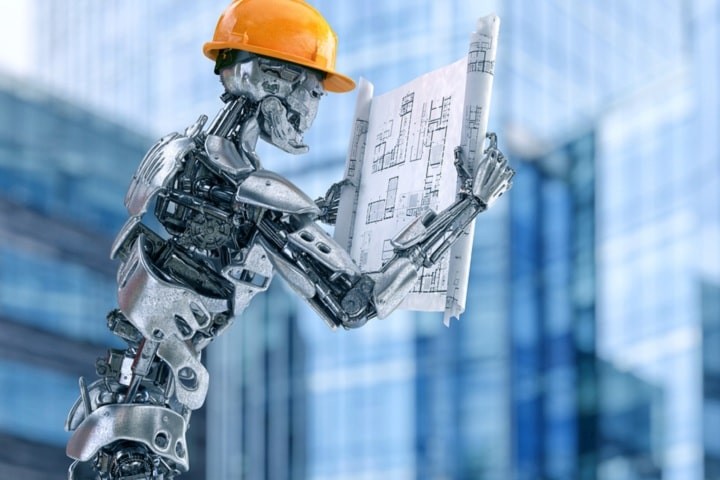
- • Robots and intelligent machines play a crucial role in increasing productivity and improving the quality of work in the construction industry. By performing precise tasks such as painting, welding, and building structures, these technologies reduce human errors and speed up processes, enhancing the overall efficiency of projects..
- • As for 3D printing, it is an innovative technology used in the manufacture of building components such as structural parts and architectural models. This technology enables complex parts to be manufactured accurately and at low cost, speeding up the construction process and saving materials.
- • On the other hand, the Internet of Things enables (IoT) Using Internet-connected sensors to monitor workflow on construction sites. These devices help collect live data on the condition of equipment and materials, enabling problems to be predicted and avoided before they occur, enhancing management effectiveness and reducing unplanned downtime..
Building maintenance:
Predictive maintenance It relies on analyzing data from sensors built into buildings to anticipate equipment problems before malfunctions occur. By collecting data about performance, vibrations, and temperatures, predictive systems can analyze this information to detect patterns that indicate potential equipment failure.. This can lead to maintenance being scheduled in advance, reducing costs and increasing operating efficiency.
As for AutomationIt includes the use of sensors and automated systems to improve the efficiency of building operation. These systems are capable of controlling various systems such as heating, ventilation and air conditioning (HVAC), lighting, and security, based on live data from sensors. By automatically adjusting settings according to actual conditions, more efficient energy consumption can be achieved and operational costs reduced, which enhances user comfort and extends equipment life..
The future of the contracting industry:
Emerging technologies Which is expected to revolutionize the construction industry includes artificial intelligence, 3D printing, and robotics. Artificial intelligence can enhance the efficiency of design, planning, and problem prediction. 3D printing offers new possibilities for making building components faster and more accurately, while robots help carry out repetitive and dangerous tasks, increasing productivity..
The impact of technology on the workforce In the construction sector, the nature of work will change dramatically. Technology will automate many tasks, reducing the need for traditional manual labor and increasing the demand for advanced technical skills. Workers will need to be trained in new technologies such as advanced software, sensors and robotics to ensure they adapt to new changes.
With the advancement of technology, the contracting sector is witnessing a noticeable shift in design, implementation and maintenance. Adopting technologies such as BIM, virtual reality, robotics, and 3D printing improves efficiency and reduces costs, while IoT and predictive maintenance offer new ways to manage projects effectively.. Despite the challenges associated with costs and skills shortages, investing in these innovations opens broad horizons for enhancing quality and sustainability in the contracting industry.. The future lies in adapting to these technologies to achieve success and innovation in this vital sector.



Leave a comment